In the year 857, the Benedictine monastery of Bonneval was founded. It would become so powerful that there would never be a lord ruling over Bonneval. Justice was administered by the monks, but could not be enforced within their own territory. Therefore, the gallows of Guibert, located at the boundary of their lands, are mentioned from the very beginnings of the abbey.
Later, Bonneval became a major grain market, one of the most important in the region. The town of Bonneval belonged directly to the Kings of France, while the fief of Guibert was under the authority of the Lord Count of Dunois, and therefore under the famous Dunois, companion of Joan of Arc from 1420 onwards.
During the Hundred Years’ War (1337–1453), the town of Bonneval was besieged many times, and the destruction was immense both in the town and at Guibert. After the Hundred Years’ War, the Château lay in ruins. It was later rebuilt at the beginning of the Renaissance period. Many Kings of France came to stay in Bonneval, and it is highly likely that some of them also visited Guibert.
It is reported that François du Chatel, Lord of Guibert and governor of the town of Bonneval from 1592 to 1616, welcomed King Henri IV at Guibert. He had indeed fought for many years in the region and transferred the jurisdictions from Chartres to Bonneval until the date of his coronation in 1594.
During the 17th and 18th centuries, the estate belonged successively to the families of Varades, de Fresques, Le Mairat, d’Archambault, and finally Breton. Monsieur Breton demolished the old château and rebuilt it in 1767. At that time, it was a very large estate covering more than 1,000 hectares.
In 1760, the Spain Road (today’s RN10) was planned and cut the estate in two. The d’Archambault family was not powerful enough to have the road diverted and therefore sold their estate. The road was completed in 1780. The French Revolution passed without causing damage to the Château or its inhabitants.
At the end of the 19th century, the 1870 war caused considerable devastation in the region, and the Château was not spared. It was restored in 1887 and the interiors were redesigned. The Château was then owned by the Duchon, Jouanneau, and later Roullier families.
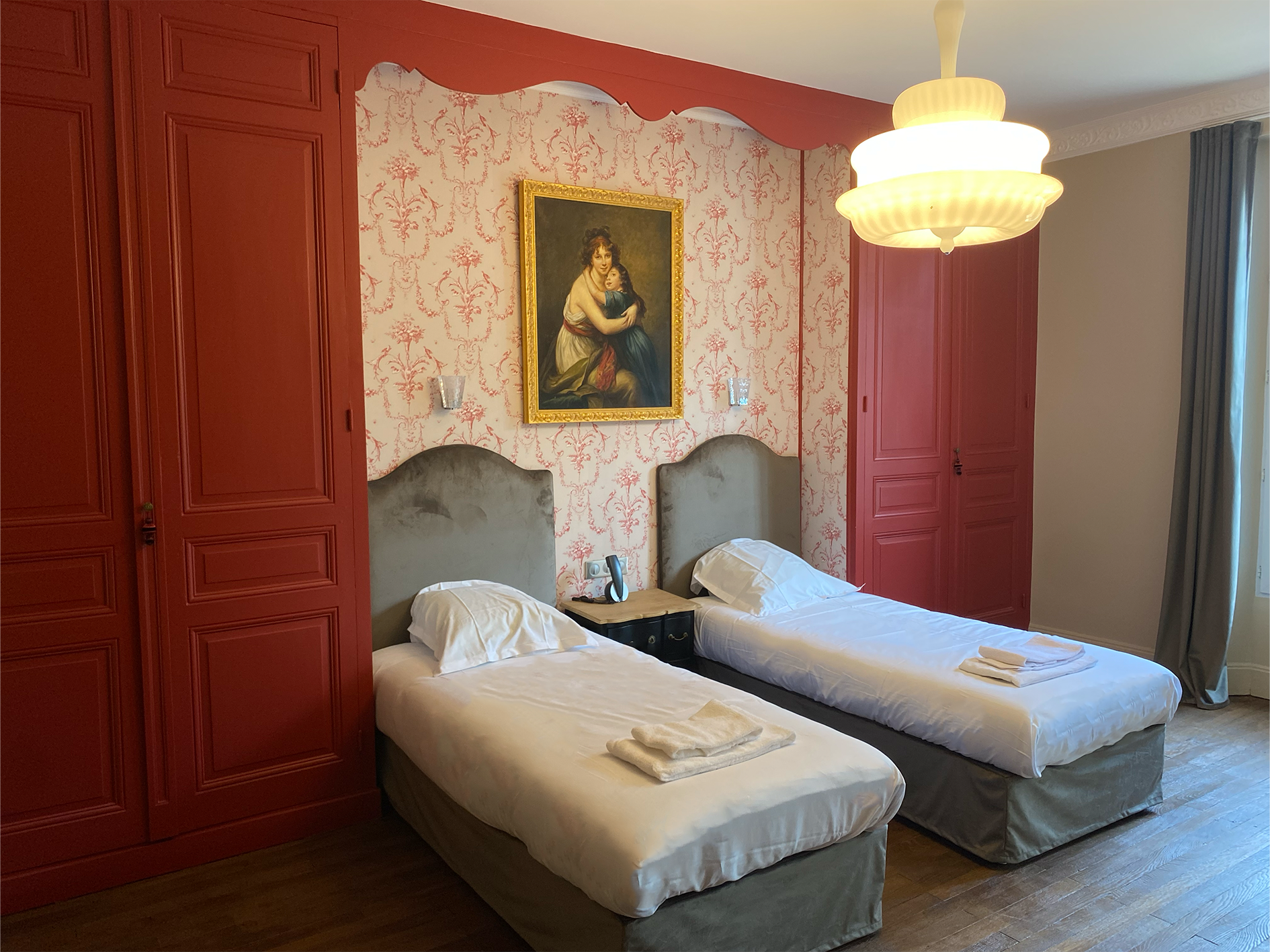
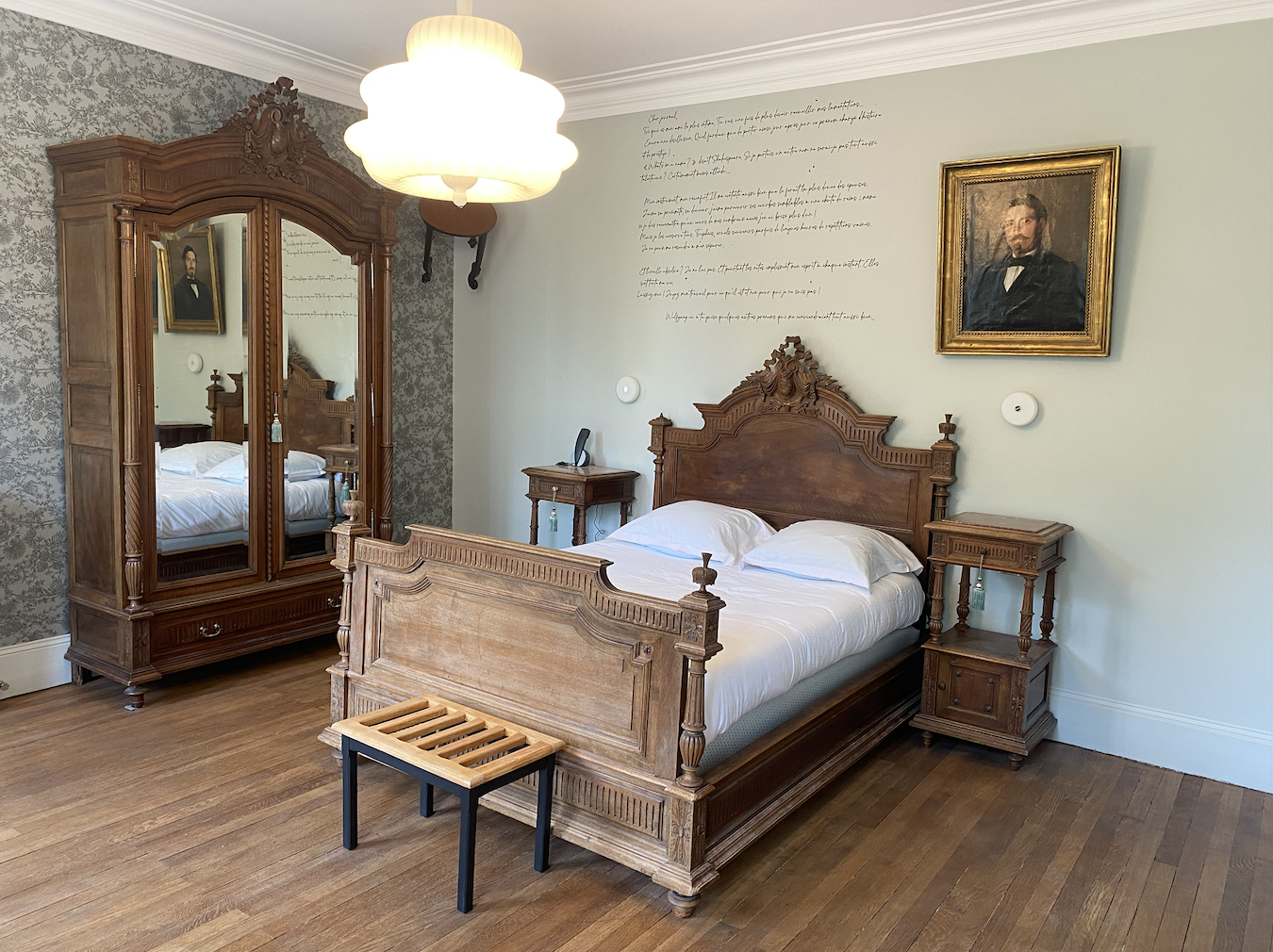
During the Second World War (1939–1945), the German Kommandantur took up residence there and completely devastated the property. The ice house was turned into a prison and torture room. Severely damaged, the Château became a shelter for people who had lost their homes during the bombings and was eventually converted into a hotel in 1954. It was at this time that the moats were filled in and the medieval postern gate was destroyed.
The new owners of the Hostellerie du Bois Guibert were the Legrand, Guérin, Leluc families, and more recently the Pisanté family.